 Posted by
By: Tristan Henriques ’25
This summer I spent my time with the Department of Homeland Security, interning with the Office of the Principal Legal Advisor under Immigration and Customs Enforcement. I was very interested in learning more about immigration procedures in the United States while having the opportunity to improve my legal research skills.
The Immigration and Customs Enforcement department is located within the Department of Homeland Security, a federal agency of the United States. Within Immigration and Customs Enforcement, there are two sub-branches: (1) Customs and Border Protection (CBP) and (2) the Office of the Principal Legal Advisor (OPLA). In my time at OPLA, I had the opportunity to work on a variety of assignments with several different attorneys. One of my recent assignments, for example, was to update the New York Penal Code Charts for the Buffalo Area of Responsibility to verify if certain crimes continue to constitute “Crimes Involving Moral Turpitude,” or CIMT. CIMTs are extremely relevant in this field, as criminal convictions involving moral turpitude can often form the basis for inadmissibility for non-citizens.
Another very interesting type of assignment I worked on was evaluating country conditions for certain countries across the globe. When a person makes an asylum claim, they typically must prove that they cannot return to their country of origin for reasonable fear of persecution from the government. However, the types of protected persecution are limited. In working on asylum cases, I had to research several sources to understand the nature of government persecution. I often utilized the Department of State webpage to learn more about those country conditions. Other resources included local news publications and regional IGO reports covering the country.
During the summer, we also had some very exciting field trips with CBP. My co-interns and I, along with several of the office’s attorneys, made two trips to the Niagara River for a guided tour with CBP’s mission boats. We then visited CBP’s base of operation and learned about the work they do. It was very interesting to learn about the broad kinds of illegal criminal activity that occurs in border regions. With technology always evolving, we learned how CBP seeks to combat drug and firearm smuggling over the border. Recent trends involve drug traffickers crafting their own home-made drones that are capable of carrying up to sixty pounds to facilitate illegal drug trafficking.
In immigration proceedings, the government attorneys first look for the different types of relief available to non-citizens. We learned of several different types of relief, including cancellation of removal, and asylum. Something that I was interested to learn this summer was just how much the government and defense attorneys communicate, both in and out of the courtroom. My fellow interns and I also observed several immigration proceedings in the Buffalo Immigration Court, seeing first-hand the type of preparation and skills necessary to litigate before an administrative judge.
The attorneys I worked with this summer were incredibly helpful and great to learn from. It was very interesting to see the kind of work the attorneys are responsible for on a day-to-day basis.
I would like to thank the donors of the Mary J. Dowd fellowship for their very generous donation to the BPILP program and for facilitating my internship this summer. Being able to focus entirely on my internship and learning experience provided peace of mind that I am incredibly grateful for. I had an incredible learning experience this summer that was made possible entirely by the Mary Dowd fellowship award.
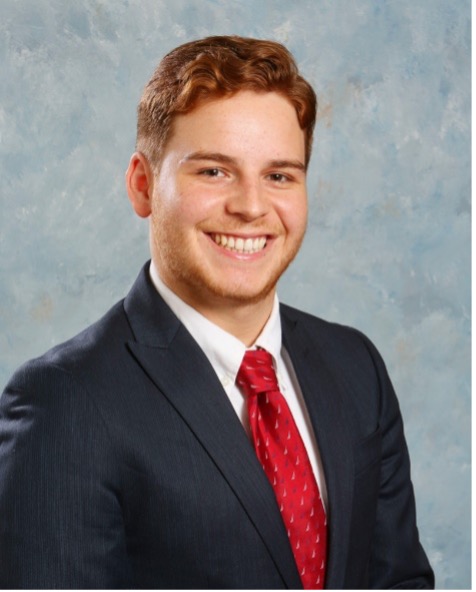
Name: Tristan Henriques ’25
Fellowship: Mary J. Dowd Fellowship
Placement: Department of Homeland Security, OPLA
Location: Buffalo, NY
One important lesson I have learned from this fellowship: “In law school, we have learned so much about different cases and the procedure behind them. However, to be present in the courtroom observing these proceedings provided a completely different perspective than simply reading a case. It was so interesting to see these complex cases being litigated, but also the collaborative nature of some of the cases.”
 UB School of Law Responds