 Posted by
By: Nicia Bottini Morales ’25
This summer I had the pleasure and honor of interning for Judge Fuentes in the Third Circuit Court of Appeals. My experience over the summer was a wonderful introduction in the legal field after spending 1L year in the classroom, laying the foundation. Almost all my 1L classes came up in some way in my internship. Civil procedure, criminal law, and constitutional law all played a part in the cases I worked on. It was really rewarding to apply concepts I learned in class to actual cases. It is important to remember that the cases we work on as interns are not hypothetical; the outcomes have serious implications on the people and parties of the case.
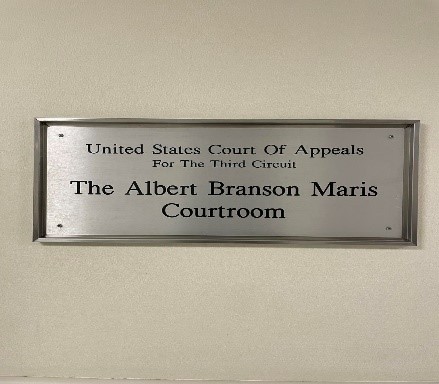
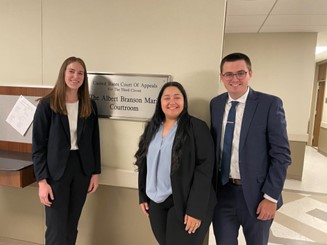
Throughout the summer, I had various types of assignments and experiences. The first week, I was tasked with creating questions for Judge Fuentes to consider during oral argument, which I had the privilege of seeing in person in Philadelphia, PA. While there, I and the other interns were able to hear several different approaches to questioning. The bench we saw was a “hot bench,” meaning they asked questions of counsel throughout the entire time. There were even some student attorneys, which were very impressive and people to aspire to during my trial experience throughout law school. After oral arguments, I had the opportunity, with my fellow interns, to meet Judge Fuentes in his chambers and learn about his journey to the bench.
Once back from Philadelphia, I worked on weekly precedential opinion memos, apprising Judge Fuentes of the decisions other panels presided over. These consisted of reading and briefing the case and outlining the reasoning posed by the judges. I had the opportunity to receive valuable feedback from all three clerks, which helped further improve my legal writing skills. My summer culminated in working on a non-precedential opinion draft with one of the clerks. I read the appellate briefs, formulated the various sections of the opinion, and incorporated notes from my assigned clerk. Overall, working through several different legal questions throughout the summer expanded my legal knowledge and perspective on the law.
My advice to future fellows is to take full advantage of the opportunities that are presented. I was hesitant to even apply to this internship, thinking I was not qualified enough. Believing in yourself and utilizing the support networks at the law school are crucial to gaining the experiences you need and deserve throughout law school. While at your internship, take every opportunity to learn. Ask questions, sit in on meetings, take on projects. Every opportunity to learn during your 1L summer is one you should take. Because of this summer, I have a deepened interest in working within the judiciary at some point post grad, which may not have happened without this internship opportunity.
I want to thank several people for this opportunity. First, the Dean’s Advisory Council for funding my summer fellowship, done through the University at Buffalo School of Law Summer Public Interest Funding & Fellowship Program. Second, Career Services for guiding me through the application. Last, my recommenders and everyone else who assisted me through this process. As a first-generation student, guidance, and support from folks all over the law school in my education and learning opportunities is greatly appreciated. The fellowship program allows students to work unpaid internships within the public sector with less financial strain.
I am extremely grateful for the experiences and knowledge I gained this summer and look forward to applying them to the rest of my legal career!

Name: Nicia Bottini Morales ’25
Fellowship: Dean’s Advisory Council Summer Fellowship
Placement: Third Circuit Court of Appeals
Location: Buffalo, NY (remote)
One important lesson I have learned from this fellowship: During my time in my fellowship, I learned the importance of preparing for oral arguments. Reading briefs before court and seeing how a panel of judges utilize them to ask attorneys questions highlighted the differing levels of preparation various sides of a case put into their work.
 UB School of Law Responds